For most of the last year, we described our kindergarten in the future tense. Small classes. An experienced teacher. A new building with room to move. Faith woven through the day rather than added on top of it.
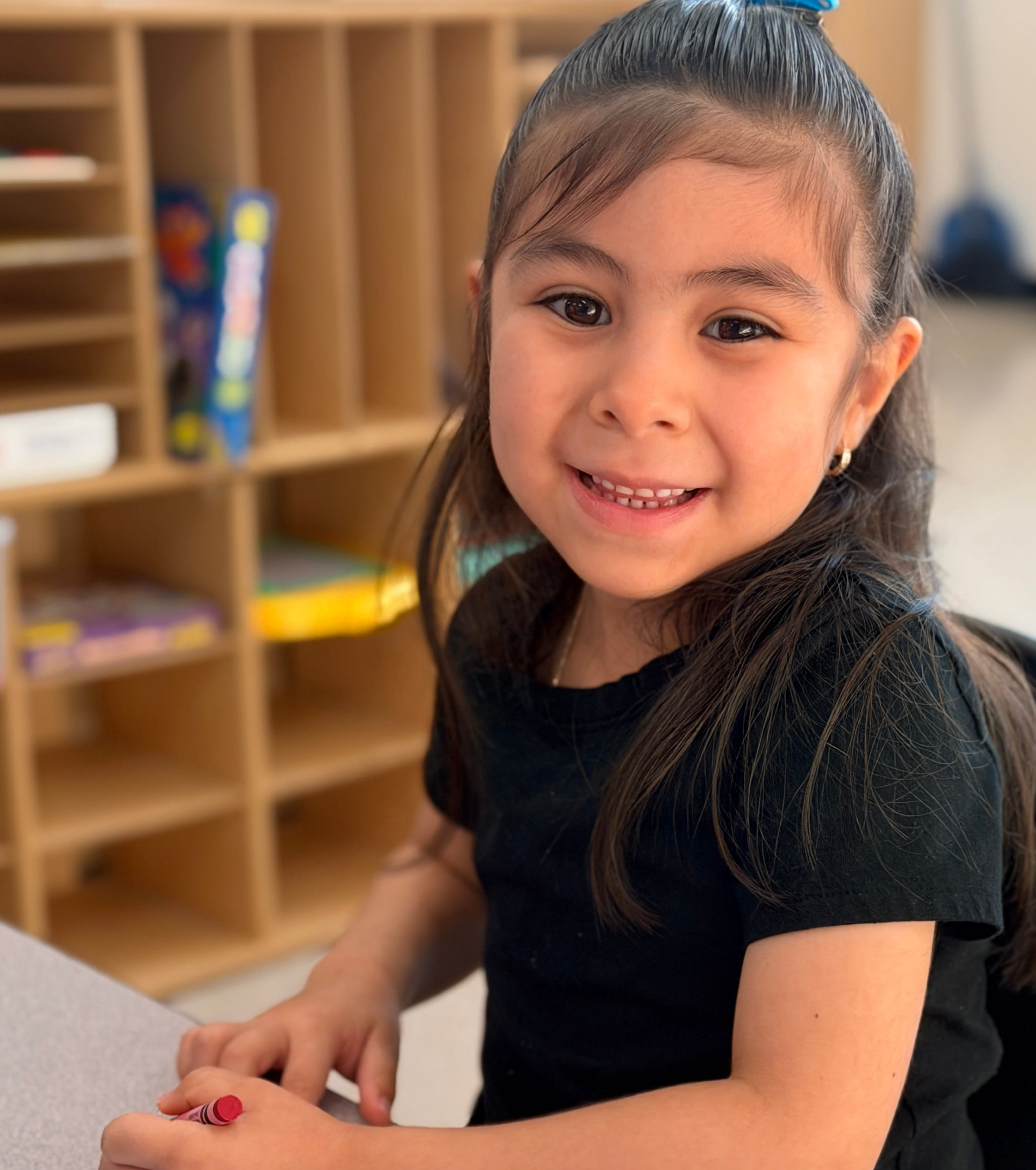
That season is over. Our inaugural kindergarten class started this August, and the building we spent a year talking about now has children in it. Backpacks in cubbies. Names on the wall. A line of five-year-olds working out where the water fountain is.
Which brings us to the question we hear more than any other once the school year begins.
Is it too late to enroll in kindergarten this year?
No. And the honest version of that answer is more useful than the short one.
School enrollment is not a door that closes in August. It moves all year. Families relocate for work. A school that looked right in July turns out to feel wrong in September. A child who seemed ready for a large classroom comes home quiet three weeks in and a parent starts looking again.
This happens every single fall, in every district, at every kind of school. It is ordinary. What is not ordinary is having somewhere to go when it happens, because most programs are full by then.
At St. Peter we have a small number of openings across our preschool age groups, and room remains in kindergarten. Small classes are the entire point of what we do, so when we say a few seats, we mean a few. We would rather keep the rooms right than fill every chair.
Why families change schools in the fall
Parents often feel like they are doing something unusual, or worse, something that will look flighty to their child. In our experience the reasons are consistent and reasonable.
Class size is the most common one. A child who gets lost in a room of twenty-five looks entirely different in a room where the teacher can reach every student in the same morning.
Fit is second. Some children need more structure than they are getting. Others need less. A five-year-old cannot always explain this, but a parent can usually feel it.
Values are third. Families who want faith present in the ordinary hours of the day, not confined to a weekly chapel service, tend to figure that out once the school year is underway.
Logistics matter too. A move, a job change, a schedule that no longer works with the school calendar.
None of these are failures of planning. They are just what happens when a real child meets a real classroom.
Why a mid-year start works in a small class
The worry we hear most often is that a child who starts in October or January will always be a step behind, socially or academically.
In a large classroom that concern has some weight. In a small one it mostly does not, and here is why.
A new student in a small class gets noticed on day one. The teacher knows within a week exactly where that child is in reading, where they are in math, and what they need. Friendships form faster because there are fewer children to meet and no established crowd to break into. And the academic gap, if there is one, gets closed with individual attention rather than a plan to catch up someday.
Five- and six-year-olds are also remarkably good at this. They tend to be far more worried about whether anyone will sit with them at lunch than about what month they arrived.
What a day looks like right now
Our core day runs from 8:00 am to 3:00 pm, five days a week. Before care starts at 7:00 am and after care runs until 5:00 pm for families who need the longer stretch.
Mrs. Karla Balduc leads the kindergarten class. She holds a master's degree in education with a specialization in reading and has more than 25 years in a classroom. Until this year, she taught our Pre-K 4 students, which means many of our kindergartners walked in on the first day already knowing their teacher. That is a quiet advantage you cannot buy.
The academics are real. Reading and language arts through HMH and IXL. Amplify Math. Nancy Larson Science. Spiritual formation through Enduring Faith. Everything is aligned to TEKS and taught the way five-year-olds actually learn, which means hands-on, active, and frequently on the floor.
We are an accredited program through the Lutheran School Accreditation Commission, TEPSAC, and NLSA.
All of it happens inside a new 22,000-square-foot campus with oversized classrooms, a gym, and a real kitchen. Room to learn, room to move, room to be a kid.
Questions worth asking when you tour in the fall
Touring while school is in session is genuinely better than touring in the spring, because there is nothing to imagine. The classrooms are full and you can see how the day runs. A few questions tell you most of what you need to know.
How many children are in the class right now, and what is the cap?
How does a new student get brought up to speed, and who is responsible for that?
What does the teacher do when a child is ahead, and how does she support a child who needs more time?
How does faith show up in an ordinary Tuesday, not just in chapel?
What does the path beyond kindergarten look like at this school?
That last one matters here. We are growing into a full elementary school serving kindergarten through fifth grade, which means the school your family chooses now can be the school your child grows up in.
What if next year is the real question
Plenty of families are not going to move a child mid-year, and that is often the right call. If you are looking ahead to the 2027 to 2028 school year instead, the useful step today is getting on our interest list.
Our classes are limited by design rather than by demand alone, so seats go early. Families on the list hear first when enrollment opens and get first access to tour dates, instead of scrambling in the spring when the calendar gets loud. There is no cost and no commitment.
Come see it while school is happening
The best way to know whether a school is right for your child is to walk the halls while the day is underway, meet the teacher, and watch your child decide for themselves.
Most parents tell us they knew within about ten minutes, usually the moment their child let go of their hand and went to look at something.
Bring your child. Bring your questions. Tours take about thirty minutes and we work around your schedule. If you have questions about tuition or the ways families cover it, we are glad to walk through that when you visit.
Scholars. Servants. Saints. That is not a tagline. It is what this month has actually looked like, one ordinary school day at a time.
Schedule a tour or learn more at stpeterchristianschool.org or call 817-491-2010.
St. Peter Christian School
15701 Cleveland Gibbs Road, Northlake, TX 76262
Serving families in Northlake, Roanoke, Trophy Club, and Justin.