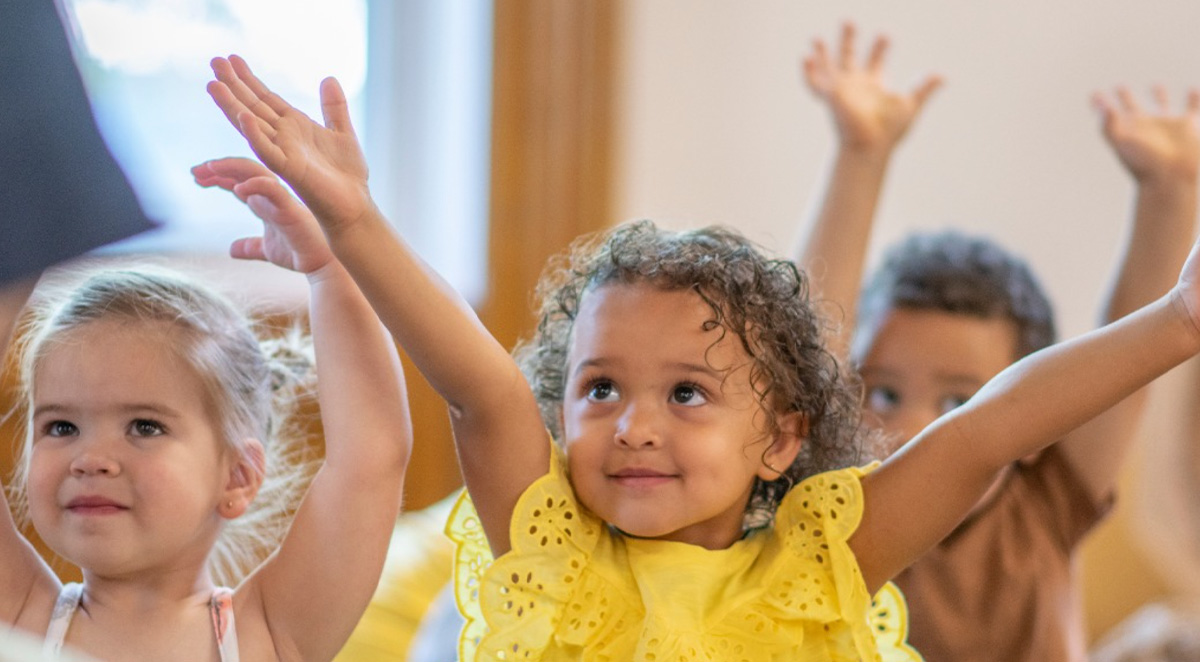
In the formative years of a child's life, the educational environment plays a pivotal role in shaping not just their academic abilities, but their character, values, and worldview. Christian preschool education offers a unique approach that integrates faith and learning, providing children with both spiritual formation and academic excellence during these crucial developmental years.
The early childhood years represent a window of extraordinary opportunity. During this time, children are not only developing cognitive abilities and social skills but are also forming the foundation of their moral compass and spiritual understanding. A faith-based education creates an environment where these elements develop harmoniously, preparing children for success in academics and in life.
1. The Developmental Benefits of Christian Preschool Education
Christian education takes a holistic approach to child development, recognizing that children are spiritual beings as well as physical and intellectual ones. This comprehensive perspective brings unique benefits to early childhood development.
Cognitive Development Through Integrated Learning
In a Christian preschool environment, cognitive development occurs within a framework that values knowledge as a gift from God. Children learn traditional pre-academic skills—letters, numbers, colors, shapes—but these are taught as part of God's ordered and purposeful creation. This integration helps children make meaningful connections and find purpose in their learning.
St. Peter Preschool's curriculum focuses on core knowledge in literacy, mathematics, language, cognitive processes, science, and gross and fine motor skills, as set forth by the Texas Education Agency. The school also includes daily religion lessons and follows a routine that includes indoor/outdoor activities, group/individual time, and child-selected/teacher-selected activities built around themes related to the child's everyday world.
This integrated approach to learning helps children develop critical thinking skills naturally as they explore how different aspects of knowledge connect within a coherent worldview. Rather than compartmentalizing academic learning and faith, children experience them as complementary aspects of understanding the world.
Social-Emotional Growth in a Values-Based Environment
Perhaps one of the most significant benefits of Christian preschool education is the intentional focus on social-emotional development within a biblical framework. Children learn to navigate relationships guided by principles like the Golden Rule, forgiveness, kindness, and respect for others as image-bearers of God.
In this supportive environment, children develop:
- Empathy and compassion for others
- Self-regulation skills guided by biblical principles
- Conflict resolution strategies based on forgiveness and reconciliation
- A sense of belonging to a caring community
- Confidence rooted in understanding their value as God's creation
These social-emotional skills provide children with tools that benefit them far beyond the preschool years, setting the foundation for healthy relationships throughout life.
Physical Development Within a Caring Community
Christian preschools recognize that physical development is also part of God's design for human flourishing. Active play, outdoor exploration, and development of both fine and gross motor skills take place in an atmosphere that celebrates the body as God's creation.
Physical activity is balanced with rest, recognizing the rhythm of work and rest modeled in scripture. This balanced approach helps children develop healthy attitudes toward their bodies and physical activity.
2. Spiritual Formation in Early Years
Early childhood is a remarkable time for spiritual formation. Young children have a natural openness to spiritual concepts and often demonstrate profound insights in their understanding of God, faith, and moral principles.
Age-Appropriate Spiritual Concepts
Christian preschools introduce spiritual concepts in developmentally appropriate ways that connect with young children's concrete thinking. Through simple Bible stories, worship songs, and prayer times, children begin to develop their understanding of:
- God's love and care for them personally
- Jesus as their friend and savior
- Basic biblical narratives and their meanings
- Prayer as conversation with God
- The beauty and wonder of God's creation
These foundational spiritual concepts are taught through methods that engage young children's natural curiosity, imagination, and love of stories and music.
Building a Biblical Foundation for Life
The biblical worldview introduced in Christian preschool provides children with a foundation for understanding themselves and the world around them. Children begin to grasp key concepts such as:
- Their identity as created and loved by God
- The reality of human imperfection and need for forgiveness
- The value and dignity of all people
- Responsibility as caretakers of God's creation
- The importance of loving God and loving others
These foundational concepts form the beginning of a biblical worldview that can guide children throughout their lives, providing a framework for making sense of their experiences and making wise choices.
Developing Prayer and Worship Habits
In Christian preschool settings, children participate in regular prayer and worship activities that help them develop spiritual habits and practices. These might include:
- Morning prayer time
- Mealtime blessings
- Simple worship songs
- Scripture memorization
- Expressing gratitude to God
- Praying for others' needs
Through these practices, children begin to develop patterns of spiritual life that can grow and mature as they do. The foundation laid in these early years often becomes the basis for lifelong spiritual practices.
3. Character Development Through Faith-Based Education
Character formation is a key element of Christian preschool education. Beyond academic knowledge, Christian education emphasizes the development of godly character qualities that will serve children well throughout their lives.
Biblical Virtues in Daily Practice
Christian preschools intentionally teach and model biblical virtues, helping children understand and practice qualities like:
- Kindness and compassion
- Honesty and integrity
- Responsibility and diligence
- Respect and obedience
- Generosity and sharing
- Patience and self-control
These virtues are taught through Bible stories, reinforced through classroom expectations, and modeled by teachers. Children have opportunities to practice these virtues in their daily interactions, gradually internalizing them as part of their character.
Conflict Resolution Through Christian Principles
One of the most valuable skills children can develop is how to resolve conflicts in healthy ways. In a Christian preschool setting, conflict resolution is taught through biblical principles such as:
- Treating others as you want to be treated
- Seeking forgiveness when you've hurt someone
- Extending forgiveness to others
- Using words to express feelings rather than physical aggression
- Looking for peaceful solutions
- Considering others' perspectives and needs
These principles provide children with a framework for navigating disagreements in ways that maintain relationships and respect the dignity of all involved.
Building Empathy and Compassion
Christian education places special emphasis on developing empathy and compassion for others. Children are encouraged to notice others' feelings, consider their needs, and respond with kindness and helpfulness.
Through service projects, care for classroom pets, helping friends who are hurt or sad, and other practical experiences, children develop the habit of looking beyond themselves to the needs of others. This foundation of empathy and compassion prepares them to be people who make a positive difference in their communities.
4. The Curriculum Approach in Christian Preschools
A distinctive feature of Christian preschool education is the integration of faith with academic excellence. Far from diminishing academic quality, the Christian approach to curriculum enhances it by providing a coherent framework that connects all areas of learning.
Integration of Faith with Academic Excellence
In a quality Christian preschool, academic learning is never separated from spiritual formation. The curriculum includes subjects commonly taught in schools as set forth by the State of Texas and the Texas Education Agency, in addition to daily Religion instruction. A strong emphasis is placed on traditional academic subjects. Children follow a daily routine consisting of indoor/outdoor activity, group/individual time, and child-selected/teacher-selected activities.
Academic subjects are taught from a perspective that recognizes God as the source of all truth and knowledge. This integration helps children develop a coherent understanding of the world rather than compartmentalizing "school knowledge" and "religious knowledge."
The curriculum typically includes:
- Language arts and pre-reading skills
- Early mathematics concepts
- Science exploration and discovery
- Social studies and community awareness
- Art and music appreciation and expression
- Physical education and movement
- Bible stories and character development
Each of these areas is approached with both academic excellence and spiritual integration in mind.
Balancing Spiritual and Intellectual Growth
Christian preschool education seeks to nurture the whole child—mind, body, and spirit. This balanced approach recognizes that intellectual development and spiritual formation are complementary rather than competing priorities.
Children are encouraged to:
- Ask questions and explore ideas
- Develop critical thinking skills
- Express creativity as a reflection of God's creativity
- Connect new knowledge with biblical truths
- Wonder at the complexity and beauty of God's creation
- Apply what they learn to living in ways that honor God and others
This balanced approach prepares children for future academic success while also nurturing their spiritual development.
Preparing for Academic Success with Moral Foundations
Research consistently shows that character qualities like perseverance, self-control, and responsibility are strong predictors of academic success. Christian preschool education deliberately cultivates these qualities, setting children up for success in their future educational endeavors.
Additionally, the rich language environment of Bible stories, songs, and discussions helps develop vocabulary and language skills that form the foundation for reading and writing. The sense of wonder and curiosity about God's creation fosters scientific thinking and exploration.
5. Partnering with Families in Faith and Education
Christian preschools recognize that parents are the primary educators and spiritual guides for their children. Rather than taking over this role, they seek to partner with families to provide consistent support for children's development.
The School-Family-Church Triangle
The most effective Christian education happens when there is alignment between school, family, and church. This "triangle" of influence provides children with consistent messages and modeling, reinforcing key values and beliefs across different contexts.
Christian preschools work to strengthen this triangle by:
- Communicating regularly with parents about curriculum and activities
- Providing resources for families to continue faith conversations at home
- Supporting parents in their role as spiritual guides
- Encouraging connection with a local church community
- Creating opportunities for families to build relationships with each other
This partnership approach recognizes that children thrive when the important adults in their lives are working together toward common goals.
Supporting Parents as Primary Spiritual Educators
While Christian preschools provide valuable spiritual nurture, they view themselves as supporters of parents rather than replacements. Many Christian preschools offer resources and encouragement to help parents fulfill their role as their children's primary spiritual guides.
These resources might include:
- Take-home materials that extend classroom Bible lessons
- Suggestions for family devotional times
- Information about developmental stages of faith
- Opportunities for parent education and discussion
- Prayer support for families
Through these supportive approaches, Christian preschools help strengthen the entire family's spiritual journey.
Building a Consistent Faith Environment
Young children benefit tremendously from consistency between home and school environments. When the values, expectations, and worldview are aligned, children develop a sense of security and coherence that supports healthy development.
Christian preschools work to create this consistency by:
- Understanding family values and priorities
- Communicating clearly about school values and practices
- Addressing questions or concerns promptly
- Seeking parent input on key decisions
- Celebrating family traditions and backgrounds
This consistent environment helps children develop a stable sense of identity and values.
6. Long-Term Impact of Early Christian Education
The benefits of Christian preschool education extend far beyond the early childhood years. Research and experience suggest that this foundation has lasting effects on children's development and life trajectory.
Research on Faith-Based Early Education Outcomes
Studies of faith-based education generally show positive outcomes in several areas:
- Academic achievement and educational attainment
- Prosocial behavior and community involvement
- Emotional well-being and life satisfaction
- Moral reasoning and ethical decision-making
- Spiritual development and religious commitment
While many factors contribute to these outcomes, the early foundation laid in Christian preschool education plays an important role in setting children on a positive developmental trajectory.
Character Development That Lasts a Lifetime
Perhaps the most significant long-term impact of Christian preschool education is the development of character qualities that serve children well throughout their lives. The biblical virtues emphasized in early childhood—honesty, kindness, responsibility, respect, and others—become internalized as part of children's identity and guide their choices into adulthood.
The foundation of knowing they are loved by God and created for a purpose gives children a sense of worth and meaning that can sustain them through life's challenges. The habits of prayer and worship begun in early childhood can develop into a lifelong relationship with God that provides guidance, comfort, and strength.
Frequently Asked Questions
What makes a Christian preschool different from a secular preschool?
A Christian preschool integrates faith into all aspects of learning and daily activities. Beyond adding Bible stories or prayer times, Christian preschools approach all subjects from a biblical worldview, emphasize character development based on biblical values, and foster spiritual formation alongside academic, social, and physical development. Teachers serve as Christian role models who can address spiritual questions and nurture children's faith development in age-appropriate ways.
Will my child still learn all the academic skills they need for kindergarten?
Absolutely! Christian preschools are committed to academic excellence. A strong emphasis is placed on traditional academic subjects. The curriculum includes all the standard pre-kindergarten skills in literacy, mathematics, science, and social studies that prepare children for kindergarten success. Many Christian preschools meet or exceed state educational standards while also providing the added dimension of spiritual and character development.
How do Christian preschools handle children from different denominational backgrounds?
Most Christian preschools welcome children from various Christian denominations and even different faith backgrounds. They typically focus on core Christian beliefs while respecting denominational differences. It's always a good idea to speak with the school administration about their specific approach and how they accommodate diverse Christian traditions. Many schools are happy to discuss any specific theological concerns you might have to ensure alignment with your family's beliefs.
Are the teachers at Christian preschools certified educators?
Many Christian preschools prioritize hiring qualified educators with appropriate credentials. Our faculty members are highly qualified. Lead teachers are state certified and/or hold college degrees. All staff is fingerprinted, and a background check is completed through the Texas Department of Public Safety.
Teachers are also trained in CPR and first aid. Each teacher is a dedicated servant in Christ who loves the Lord and His children. When considering a Christian preschool, you can ask about teacher qualifications, ongoing professional development, and the balance of educational expertise and spiritual maturity they seek in their staff.
How do Christian preschools approach discipline?
Christian preschools typically approach discipline as an opportunity for character development and teaching biblical values like responsibility, respect, and reconciliation. Students at St. Peter School are expected to act in an orderly and respectful manner. The school works together to maintain the highest Christian standard of courtesy, kindness, morality, and honesty. It is the right of each student to learn and play, and no one has the freedom to interfere with another person's (child or adult) right to work, play, think, or create.
Many Christian preschools use positive discipline approaches that help children understand the impact of their choices while emphasizing God's love and forgiveness. The goal is to guide children toward self-regulation and making wise choices rather than simply enforcing rules.
Conclusion
Christian preschool education offers a unique approach to early childhood development that nurtures the whole child—intellectually, socially, physically, and spiritually. By integrating faith and learning, these programs provide children with a coherent worldview and value system that can guide them throughout their lives.
The early childhood years present an extraordinary opportunity to lay foundations that will support children's development for years to come. A quality Christian preschool partners with parents to make the most of this opportunity, nurturing children's natural curiosity, creativity, and spiritual openness.
For families seeking an educational environment that aligns with their Christian values and provides excellent preparation for future academic success, a Christian preschool offers an ideal solution. By choosing this foundation for their children's educational journey, parents provide them with tools for not just academic achievement but for meaningful and purposeful living.
Interested in exploring Christian preschool options for your child? Schedule a tour at St. Peter School to learn more about our approach to integrating faith and learning in early childhood education. We invite you to see firsthand how our program nurtures children's development as scholars, servants, and saints to the glory of God.